PUR/PIR & Rockwool Wall Sandwich Panels
PUR/PIR & Rockwool Wall Sandwich Panels
PUR/PIR & Rockwool Wall Sandwich Panels
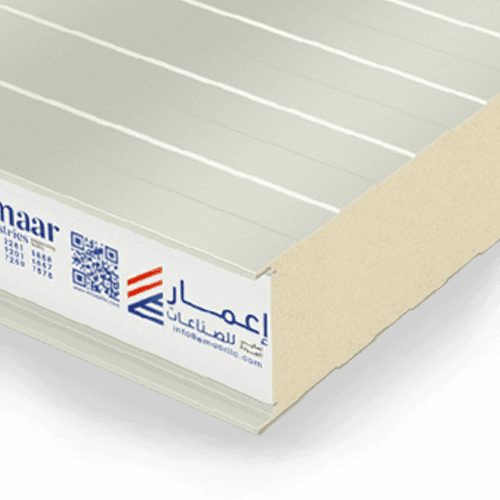

Emaar Industries wall sandwich panels are designed for external building walls, internal partitions and insulated industrial enclosures, with PUR/PIR and Rockwool core options. Wall panels are particularly useful where the project requires a combination of thermal insulation and a finished wall surface without building separate insulation and cladding layers. The appropriate panel system depends on the building use, required insulation, fire performance, internal environment, acoustic requirements and the type of wall construction.
Emaar Industries wall sandwich panels are designed for external building walls, internal partitions and insulated industrial enclosures, with PUR/PIR and Rockwool core options. Wall panels are particularly useful where the project requires a combination of thermal insulation and a finished wall surface without building separate insulation and cladding layers. The appropriate panel system depends on the building use, required insulation, fire performance, internal environment, acoustic requirements and the type of wall construction.
Where Are Wall Sandwich Panels Used?
Industrial warehouses
Factories
Manufacturing facilities
Logistics buildings
Commercial buildings
Food processing facilities
Temperature-controlled areas
Internal insulated partitions
Where Are Wall Sandwich Panels Used?
Industrial warehouses
Factories
Manufacturing facilities
Logistics buildings
Commercial buildings
Food processing facilities
Temperature-controlled areas
Internal insulated partitions
External vs. Internal Wall Panels
External wall sandwich panels form part of the building's outer envelope, so the selection should consider thermal insulation, wind loads, weather exposure, corrosion protection, panel joints, openings and façade appearance. Door and window openings, corners, base details and connections to the roof should be coordinated with the panel system to maintain the continuity of the building envelope.
External wall sandwich panels form part of the building's outer envelope, so the selection should consider thermal insulation, wind loads, weather exposure, corrosion protection, panel joints, openings and façade appearance. Door and window openings, corners, base details and connections to the roof should be coordinated with the panel system to maintain the continuity of the building envelope.
Internal wall panels are mainly used to divide industrial and commercial spaces into separate areas with different temperature, hygiene, fire or operational requirements. They can be used for production areas, storage areas, clean areas, offices and insulated partitions where a fast and finished wall system is required.
Internal wall panels are mainly used to divide industrial and commercial spaces into separate areas with different temperature, hygiene, fire or operational requirements. They can be used for production areas, storage areas, clean areas, offices and insulated partitions where a fast and finished wall system is required.
Which wall panel is better for a factory: PIR or Rockwool?
Are wall sandwich panels suitable for industrial buildings?
What should be considered around doors and windows?
Wall Sandwich Panels for Food & Industrial Buildings
For food processing, pharmaceutical, clean production and other controlled environments, wall panels are often selected not only for insulation but also for surface cleanability, moisture control, joint design and resistance to the internal operating environment. The facing material, coating, joint configuration and detailing around doors and penetrations should therefore be selected according to the cleaning process and environmental conditions.
For food processing, pharmaceutical, clean production and other controlled environments, wall panels are often selected not only for insulation but also for surface cleanability, moisture control, joint design and resistance to the internal operating environment. The facing material, coating, joint configuration and detailing around doors and penetrations should therefore be selected according to the cleaning process and environmental conditions.
Wall Sandwich Panels for Cold & Temperature-Controlled Areas
In temperature-controlled spaces, wall panels form part of a continuous insulated envelope where thermal bridging, air leakage and condensation can have a significant effect on performance. Panel joints, corners, floor connections, ceiling interfaces and door openings should be properly detailed to maintain insulation continuity and control moisture movement.
In temperature-controlled spaces, wall panels form part of a continuous insulated envelope where thermal bridging, air leakage and condensation can have a significant effect on performance. Panel joints, corners, floor connections, ceiling interfaces and door openings should be properly detailed to maintain insulation continuity and control moisture movement.

Emaar Industries Digital Marketing Team 2025
Emaar Industries Digital Marketing Team 2025
Emaar Industries Digital Marketing Team 2025