PUR/PIR Wall Sandwich Panels
PUR/PIR Wall Sandwich Panels
PUR/PIR Wall Sandwich Panels
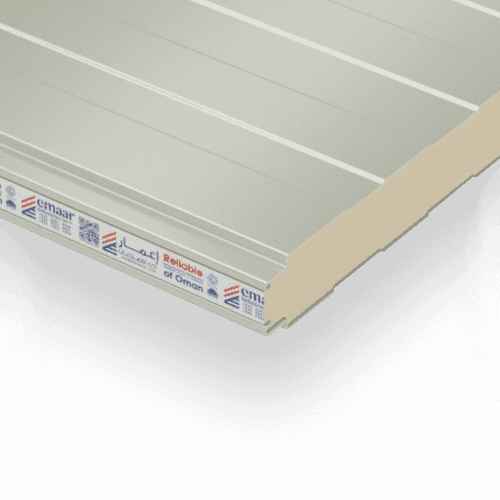
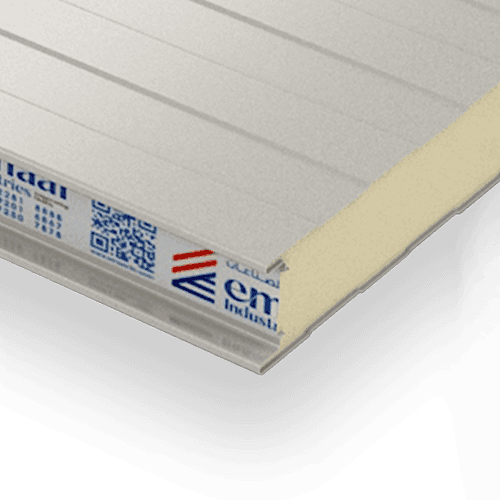
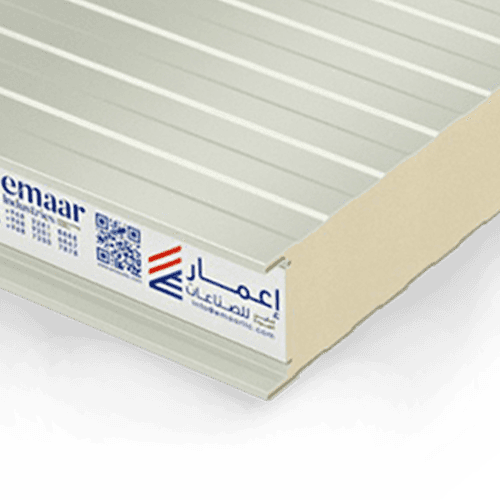
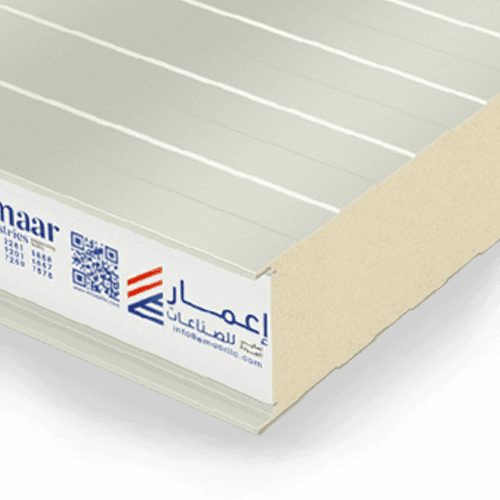

Emaar Industries PUR/PIR Wall Sandwich Panels are used for insulated external walls and internal partitions in factories, warehouses, logistics buildings, commercial facilities and temperature-controlled areas. The panels combine a PUR/PIR insulation core with metal facings to create a finished insulated wall in a single system. Available thicknesses from 50 mm to 200 mm provide options for different insulation and building requirements.
Emaar Industries PUR/PIR Wall Sandwich Panels are used for insulated external walls and internal partitions in factories, warehouses, logistics buildings, commercial facilities and temperature-controlled areas. The panels combine a PUR/PIR insulation core with metal facings to create a finished insulated wall in a single system. Available thicknesses from 50 mm to 200 mm provide options for different insulation and building requirements.
Wall Panel Thicknesses:
Panel Thickness:
Typical Use:
Suitable where a lower level of thermal insulation is required
Provides increased insulation compared with 50 mm
Suitable for applications requiring a higher level of wall insulation
Intended for applications with higher thermal insulation requirements
Suitable where high wall insulation is required
External Wall Sandwich Panels
For external facades, PUR/PIR wall panels provide the building with a combination of thermal insulation and external wall cladding. Panel selection should take into account the building's orientation, local climate, wind conditions, required insulation level and external exposure. Particular attention should be given to corners, wall-to-roof connections, base details, doors, windows and service penetrations because these areas affect the overall performance of the insulated wall.
For external facades, PUR/PIR wall panels provide the building with a combination of thermal insulation and external wall cladding. Panel selection should take into account the building's orientation, local climate, wind conditions, required insulation level and external exposure. Particular attention should be given to corners, wall-to-roof connections, base details, doors, windows and service penetrations because these areas affect the overall performance of the insulated wall.
Internal Wall Sandwich Panels
PUR/PIR wall panels can also be used as internal insulated partitions where different areas of a building require separation. This is particularly useful in factories and warehouses where production, storage, offices or temperature-controlled areas operate under different conditions. The required panel thickness depends mainly on the temperature difference between the two spaces and the required level of thermal separation.
PUR/PIR wall panels can also be used as internal insulated partitions where different areas of a building require separation. This is particularly useful in factories and warehouses where production, storage, offices or temperature-controlled areas operate under different conditions. The required panel thickness depends mainly on the temperature difference between the two spaces and the required level of thermal separation.
How do I choose the right PIR wall panel thickness?
What is the difference between 50 mm, 100 mm and 150 mm PIR wall panels?
Can PIR wall panels be used in hot climates such as Oman and the GCC?
How should PIR wall panels be specified around doors and windows?
PUR/PIR Wall Panels for Temperature-Controlled Areas
When PUR/PIR wall panels are used around temperature-controlled spaces, the wall should be considered as part of a complete insulated enclosure rather than as an isolated wall product. Panel joints, corners, floor connections, ceiling connections and door openings should maintain insulation continuity and limit unwanted air movement and condensation.
When PUR/PIR wall panels are used around temperature-controlled spaces, the wall should be considered as part of a complete insulated enclosure rather than as an isolated wall product. Panel joints, corners, floor connections, ceiling connections and door openings should maintain insulation continuity and limit unwanted air movement and condensation.
PUR/PIR Wall Panels for Factories & Warehouses
One of the main advantages of a sandwich wall system is that insulation and wall cladding are installed as one building product, reducing the number of separate construction layers. This makes PUR/PIR wall panels particularly practical for large factories, warehouses and logistics buildings where extensive wall areas need to be enclosed quickly while maintaining a consistent insulated envelope.
One of the main advantages of a sandwich wall system is that insulation and wall cladding are installed as one building product, reducing the number of separate construction layers. This makes PUR/PIR wall panels particularly practical for large factories, warehouses and logistics buildings where extensive wall areas need to be enclosed quickly while maintaining a consistent insulated envelope.

Emaar Industries Digital Marketing Team 2025
Emaar Industries Digital Marketing Team 2025
Emaar Industries Digital Marketing Team 2025