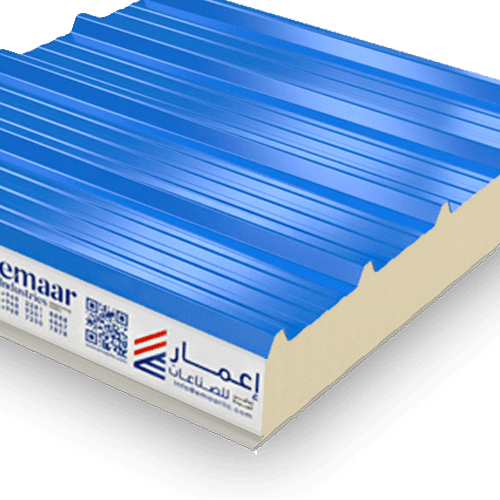
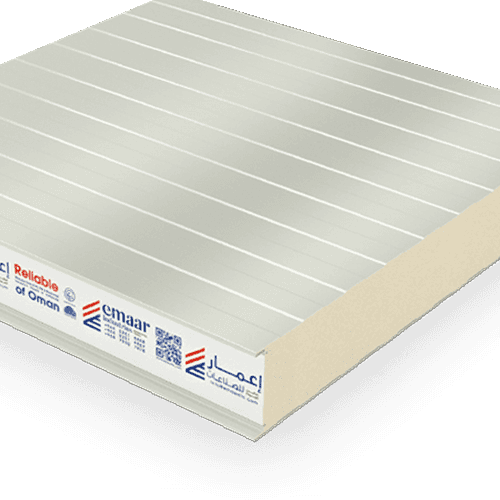

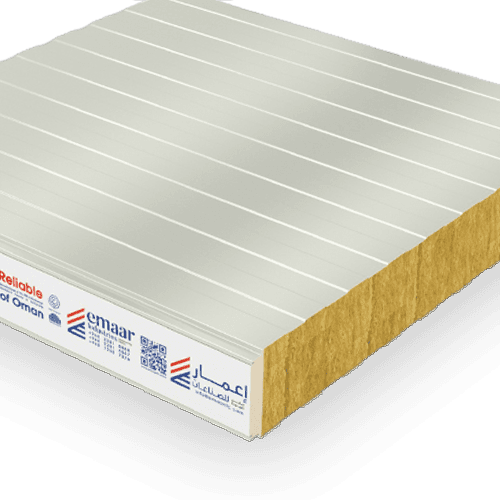
Emaar Industries manufactures insulated sandwich panels with PIR and Rockwool cores for roof and wall applications. The appropriate panel system should be selected according to the project's thermal requirements, fire strategy, building use, structural conditions, environmental exposure, and applicable regulations. PIR and Rockwool systems serve different engineering priorities, while roof and wall panels are designed around different loading, weatherproofing, and envelope requirements.
PIR vs. Rockwool:
Primary Advantage:
High thermal insulation efficiency relative to thickness
Fire performance and non-combustible mineral insulation
Thermal Design:
Suitable where high thermal resistance with relatively low thickness is required
Suitable where thermal insulation is required together with mineral wool construction
Fire Consideration:
Fire performance depends on the tested panel assembly and certification
Rockwool core provides a non-combustible insulation material; complete system classification should still be verified
Acoustic Consideration:
Suitable for general insulated envelope applications
Particularly relevant where acoustic performance is also an important consideration
Typical Applications:
Warehouses, factories, logistics facilities, commercial buildings, food processing and temperature-controlled spaces
Industrial buildings, factories, fire-sensitive areas
Skin Material Selection
Material:
Main Benefit:
When It Makes Sense?
PPGI (Galvanized)
Strength + lower cost
General industrial projects
PPAZ (Aluzinc)
Corrosion resistance + strength
Humid / exposed environments
PPAL (Aluminium)
Very light + high corrosion resistance
Coastal projects
Aluminium normally costs more than galvanized steel, mainly because it offers lower weight and better corrosion resistance. For a coastal building, that extra cost can make sense when reducing corrosion risk and panel weight are important.
Coating Selection
Coating:
Main Point:
Typical Reason to Choose:
PE (Polyester)
Standard painted finish
Cost-effective general use
HDPE
Higher-performance coating
More demanding outdoor exposure
PVDF
Strong color and weather performance
Projects where appearance and long-term coating performance matter
PVC
Different surface protection options
Project-specific requirements
Do not select a coating only by its name. The right coating depends on the building location, UV exposure, humidity, corrosion risk, expected service life and appearance requirements.
