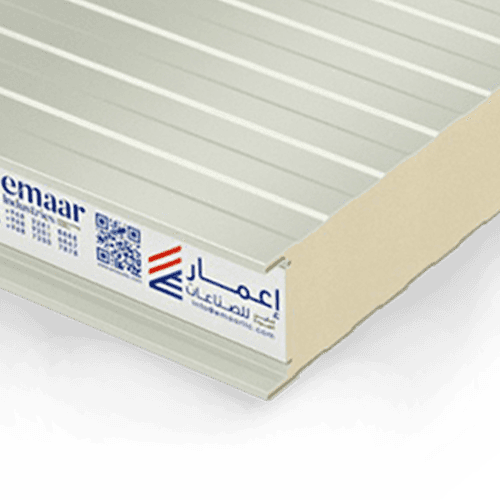
100 mm PUR/PIR Roof Sandwich Panel

100 mm PUR/PIR Roof Sandwich Panel

100 mm PUR/PIR Roof Sandwich Panel

Panel Profile:

• Type: Corrugated

• Effective Coverage Width:

Core Details:

• Material:

• Thickness:

• Density:

Top & Bottom Skin Details:

• Material Options:

• Thickness Ranges:

• Coating Options:

• Colours: RAL

Need Quotation with these Collecting?

100mm PUR/PIR Roof Sandwich Panel

Panel Profile:

• Type:

Corrugated

• Effective Coverage Width:

Core Details:

• Material:

• Thickness:

• Density:

Top & Bottom Skin Details:

• Material Options:

• Thickness Ranges:

• Coating Options:

• Colours:

RAL

Need Quotation with these Collecting?

100mm PUR/PIR Roof Sandwich Panel

Panel Profile:

• Type: Corrugated

• Effective Coverage Width:

Core Details:

• Material:

• Thickness:

• Density:

Top & Bottom Skin Details:

• Material Options:

• Thickness Ranges:

• Coating Options:

• Colours: RAL

Need Quotation with these Collecting?

100mm PUR/PIR Roof Sandwich Panel

100 mm PUR/PIR Roof Sandwich Panel is commonly selected for projects where roof insulation is a major design requirement. It is suitable for industrial buildings, warehouses, logistics facilities and temperature-controlled environments where reducing heat transfer through the roof is important.

100 mm PUR/PIR Roof Sandwich Panel is commonly selected for projects where roof insulation is a major design requirement. It is suitable for industrial buildings, warehouses, logistics facilities and temperature-controlled environments where reducing heat transfer through the roof is important.

Why do some projects move from 75 mm to 100 mm?

In many industrial buildings, the roof is the largest exposed surface. When cooling costs, indoor comfort or temperature control become more important, engineers often evaluate thicker roof panels. A 100 mm PUR/PIR roof panel provides more insulation than thinner alternatives and is frequently considered for projects with higher thermal performance targets.

In many industrial buildings, the roof is the largest exposed surface. When cooling costs, indoor comfort or temperature control become more important, engineers often evaluate thicker roof panels. A 100 mm PUR/PIR roof panel provides more insulation than thinner alternatives and is frequently considered for projects with higher thermal performance targets.

Which projects typically consider 100 mm?

Project Type:

Why 100 mm is Often Considered?

Air-conditioned warehouse

Better roof insulation

Logistics facility

Large roof area exposed to sunlight

Food processing facility

Improved temperature stability

Commercial building

Higher energy efficiency targets

Industrial building

Reduced heat transfer through the roof

Some projects invest heavily in wall insulation but underestimate the importance of the roof. In hot climates, a large amount of heat can enter through the roof throughout the day. This is one reason why many engineers evaluate 100 mm roof panels when designing temperature-controlled buildings.

Some projects invest heavily in wall insulation but underestimate the importance of the roof. In hot climates, a large amount of heat can enter through the roof throughout the day. This is one reason why many engineers evaluate 100 mm roof panels when designing temperature-controlled buildings.

Choosing the Right Roof Panel Thickness

Requirement:

50 mm

75 mm

100 mm

Basic insulation

Air-conditioned building

Higher thermal performance

Large roof area

Temperature control

Is 100 mm a good roof panel for warehouses in Oman?

Is 100 mm better than 75 mm for an air-conditioned factory?

Do Emaar Industries sandwich panels have certifications?

Do Emaar Industries panels have Government approvals?
