50 mm PUR/PIR Roof Sandwich Panel
50 mm PUR/PIR Roof Sandwich Panel
50 mm PUR/PIR Roof Sandwich Panel


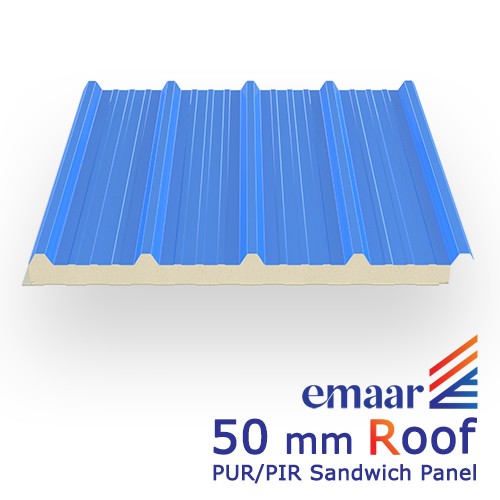
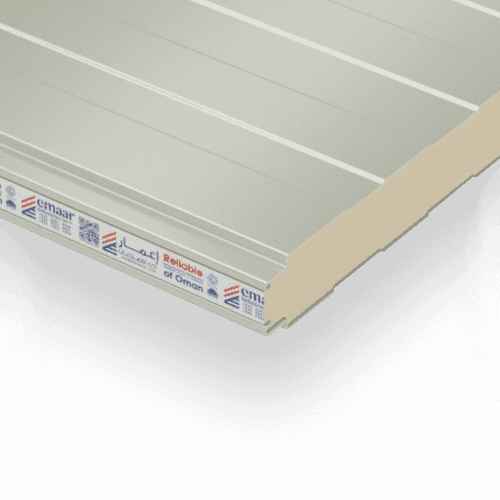


50 mm PUR/PIR Roof Sandwich Panel is a popular middle option for industrial and commercial roofs. It provides more insulation than a 30 mm panel while keeping the roof thickness relatively low. It can be considered for factories, warehouses, workshops and commercial buildings where the roof needs to provide useful thermal insulation without moving to a thicker panel.
50 mm PUR/PIR Roof Sandwich Panel is a popular middle option for industrial and commercial roofs. It provides more insulation than a 30 mm panel while keeping the roof thickness relatively low. It can be considered for factories, warehouses, workshops and commercial buildings where the roof needs to provide useful thermal insulation without moving to a thicker panel.
50 mm: The middle ground
Choosing a roof panel is often a balance between insulation, project requirements and cost. A 50 mm PUR/PIR panel can make sense when 30 mm is too limited but 75 mm or more is not necessary for the building. The right choice depends on whether the space is air-conditioned, how much heat the roof receives and the required thermal performance.
Choosing a roof panel is often a balance between insulation, project requirements and cost. A 50 mm PUR/PIR panel can make sense when 30 mm is too limited but 75 mm or more is not necessary for the building. The right choice depends on whether the space is air-conditioned, how much heat the roof receives and the required thermal performance.
Which one fits your project?
Project condition:
30 mm
50 mm
75 mm+
Unconditioned storage
✓
✓
—
General warehouse
✓
✓
—
Factory
✓
✓
Depends
Air-conditioned warehouse
—
✓
✓
Strong temperature control
—
Depends
✓
Higher insulation target
—
—
✓
Why move from 30 mm to 50 mm?
The extra thickness is mainly useful when you want more insulation and less heat transfer through the roof.
For example, a warehouse in the GCC may not need the same roof insulation as a temperature-controlled facility. The important question is not simply “Which panel is thicker?” but:
“What level of roof insulation does my building actually need?”
For example, a warehouse in the GCC may not need the same roof insulation as a temperature-controlled facility. The important question is not simply “Which panel is thicker?” but:
“What level of roof insulation does my building actually need?”
Is 50 mm a good thickness for a sandwich panel roof?
Is 50 mm better than 30 mm for a warehouse in the GCC?
Is 50 mm enough for an air-conditioned warehouse?
Why choose 50 mm instead of 75 mm?

Emaar Industries Digital Marketing Team 2025
Emaar Industries Digital Marketing Team 2025
Emaar Industries Digital Marketing Team 2025